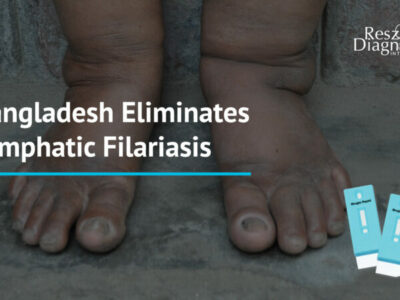

Selangor, 13 August 2025 – Lymphatic filariasis (LF), commonly known as elephantiasis, is a neglected tropical disease. Infection occurs when filarial parasites are transmitted to humans through mosquitoes.
Lymphatic filariasis impairs the lymphatic system and can lead to the abnormal enlargement of body parts (arms, legs, breast or genitals), causing pain, severe disability and social stigma. 1,2
Lymphatic filariasis is caused by infection with parasites classified as nematodes (roundworms) of the family Filariodidea. There are 3 types of these thread-like filarial worms:1,2
- Wuchereria bancrofti, which is responsible for 90% of the cases
- Brugia malayi, which causes most of the remainder of the cases
- Brugia timori, which also causes the disease.

Worms known to cause lymphedema: W. bancrofti, B. malayi, B. timori.
Photo Credit: Kwame Kumi Asare et al. (2024) Lymphatic Filariasis (LF) Elimination: What Is the Current Situation? DOI: 10.5772/intechopen.1007645
Route of Infection


LYMPATIC FILARIASIS Infection is often SILENT
The majority of LF infections are asymptomatic, showing no external signs of infection while contributing to the transmission of the parasite. These asymptomatic infections still cause damage to the lymphatic system and the kidneys and alter the body’s immune system. 1,2
Migrant populations and foreign workers can unknowingly introduce LF into non-endemic regions, posing a public health risk if infections go undetected.
Patients with active filarial infection typically have elevated levels of antifilarial IgG4 in the blood and these can be detected using routine assays.2
Fast. Accurate. Reliable.
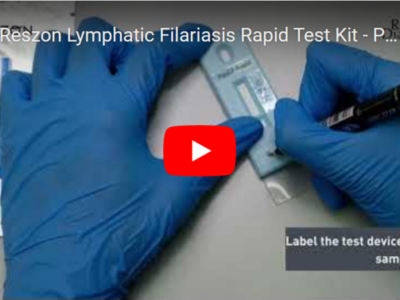
The Reszon Filariasis IgG4 Rapid Test Kit detects IgG4 antibodies against both major lymphatic filariasis (LF) parasites – Wuchereria bancrofti and Brugia species – making it ideal for screening foreign workers from multiple countries.5

What does the positive Filariasis IgG4 test result tell you?
Positive result indicates exposure to LF parasites 1,2
- Shows if someone’s immune system has reacted to LF parasites before.
- IgG4 antibodies can remain even after treatment or recovery, not necessarily active infection.
- Positive cases can be followed up for treatment if needed.

Why choose Reszon Filariasis IgG4 Rapid Test Kit?
- Proven accuracy: over 96% sensitivity and 99% specificity in global studies 3
- Quick and easy: Rapid results in minutes, no lab equipment required
- Comprehensive coverage: Works for both W. bancrofti and Brugia infections
- Trusted worldwide: Validated by international research teams 3, 4

Benefits for Employers and Health Authorities
- Early detection of hidden infections, even without symptoms
- Prevents introduction or spread of LF in non-endemic areas
- Simple on-site screening for foreign workers and migrant populations
- Supports national disease elimination programs – antibody tests are now recommended by WHO to help detect lymphatic filariasis early and guide decisions, even in areas where the disease is almost gone 6

Keep your workforce healthy. Keep your community safe.
Choose Reszon Filariasis IgG4 Rapid Test Kit – the reliable first step in lymphatic filariasis screening.

Try It in Your Setting
We’re offering FREE sample kits and the complete Instructions for Use (IFU) for clinics, medical labs, and public health facilities interested in evaluating the Reszon Filariasis IgG4 Rapid Test Kit.

References
- World Health Organization (2024) Lymphatic Filariasis Fact Sheet. Available at: https://www.who.int/news-room/fact-sheets/detail/lymphatic-filariasis (Accessed: 13 August 2025)
- Centers for Disease Control and Prevention (2024) Clinical Overview of Lymphatic Filariasis. Available at: https://www.cdc.gov/filarial-worms/hcp/clinical-overview/index.html (Accessed: 13 August 2025)
- Rahmah N et al. Multicentre evaluations of two new rapid IgG4 tests (WB rapid and panLF rapid) for detection of lymphatic filariasis. Filarial Journal 2007; 6: 9 http://www.filariajournal.com/content/6/1/9
- Noordin R. et al. Laboratory Evaluation of a Rapid IgG4 Antibody Test (BLF Rapid™) for Bancroftian Filariasis. Am J Trop Med Hyg. 2018;99(6):1587-1590. Noordin R, Yunus MH, Robinson K, Won KY, Babu S, Fischer PU, Hisam S, Mahmud R. Laboratory Evaluation of a Rapid IgG4 Antibody Test (BLF Rapid™) for Bancroftian Filariasis. Am J Trop Med Hyg. 2018 ;99(6):1587-1590. https://www.ncbi.nlm.nih.gov/pmc/articles/PMC6283493/
- Noordin R, Mohd Zain SN, Yunus MH, Sahimin N. Seroprevalence of lymphatic filariasis among migrant workers in Peninsular Malaysia. Trans R Soc Trop Med Hyg. 2017 Aug 1;111(8):370-372. https://doi.org/10.1093/trstmh/trx062
- World Health Organization. (2011). Monitoring and epidemiological assessment of mass drug administration in the global programme to eliminate lymphatic filariasis: a manual for national elimination programmes. World Health Organization. https://iris.who.int/handle/10665/44580