
FACTS ABOUT STRONGYLOIDIASIS
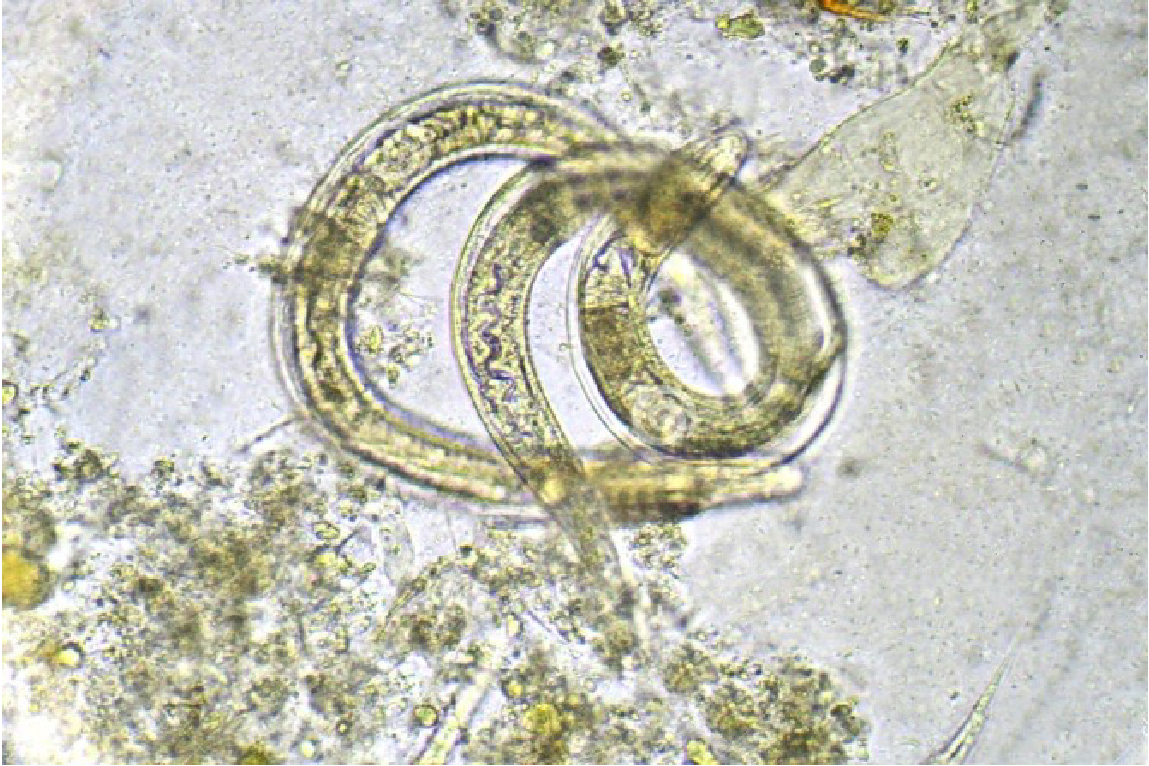
©WHO / Strongyloides stercoralis threadworm in stool, analyzed by microscope.
What is Strongyloidiasis
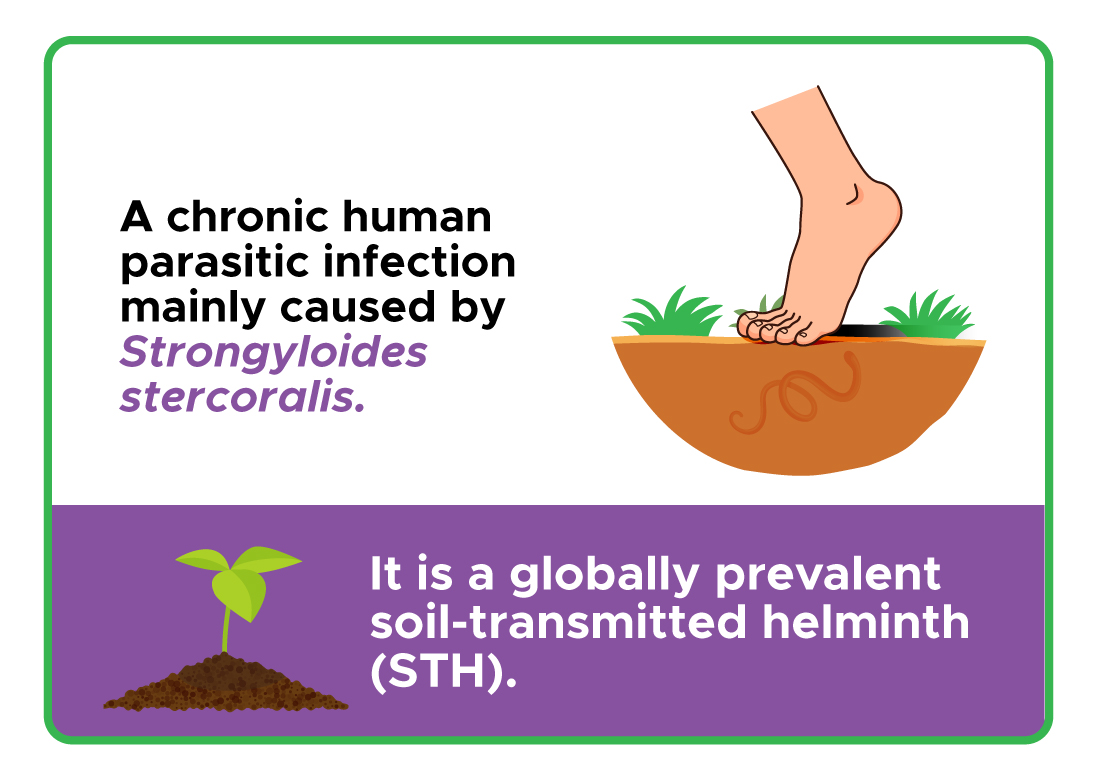
Strongyloidiasis is a chronic human parasitic infection mainly caused by Strongyloides stercoralis, a soil-transmitted helminth (STH) capable of persisting in the human host for decades through a unique autoinfection cycle. This ability allows larvae to reinvade the host without external re-exposure, making strongyloidiasis fundamentally different from other STH infections and a major reason it often remains undetected for years.
STRONGYLOIDIASIS AT A GLANCE
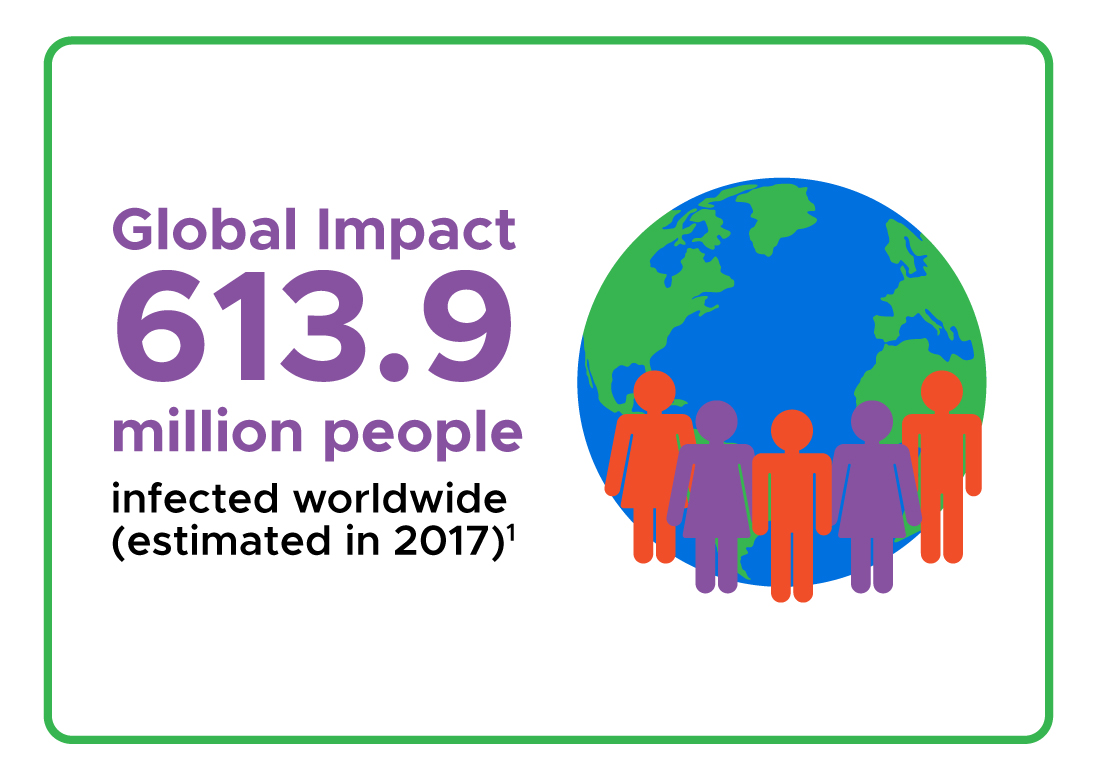
Globally, strongyloidiasis was estimated to affect 613.9 million people in 2017, with the highest burden reported in tropical and subtropical regions. The South-East Asia, African, and Western Pacific regions together accounted for approximately 76.1% of global infections.
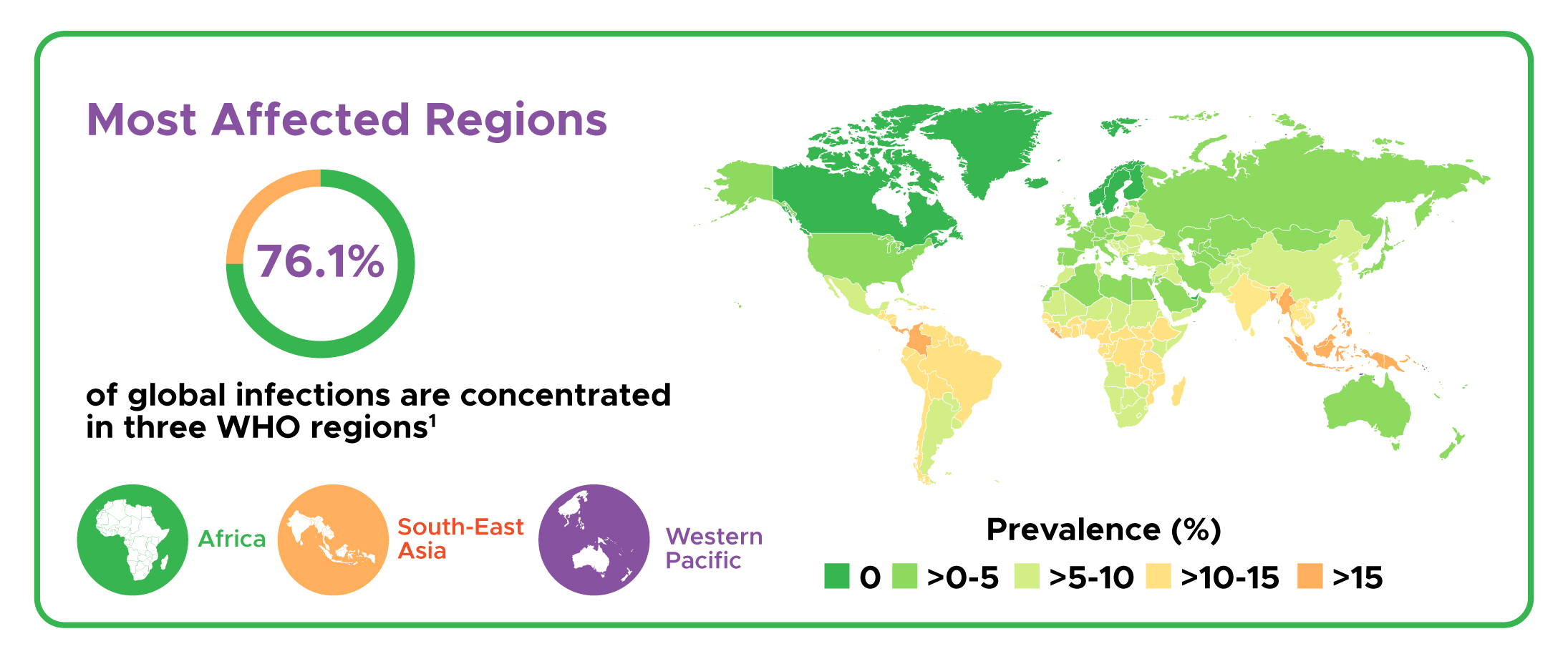
Estimated strongyloidiasis prevalence (STG-PR) for 2017, as predicted by the best statistical model
HIGH MORTALITY RATE IF UNDIAGNOSED
Many infected individuals develop chronic, asymptomatic infections that may persist for decades – or even a lifetime – because of the parasite’s ability to autoinfect. Of particular concern is the risk of progression to hyperinfection syndrome or disseminated strongyloidiasis following immunosuppression, especially with corticosteroid therapy. Therefore, screening for Strongyloides infection is recommended before initiating immunosuppressive therapy in individuals at risk of infection.
- Mortality rates in hyperinfection syndrome and disseminated strongyloidiasis can reach almost 90%
- Death often occurs due to delayed diagnosis
- Preventable with early screening & treatment
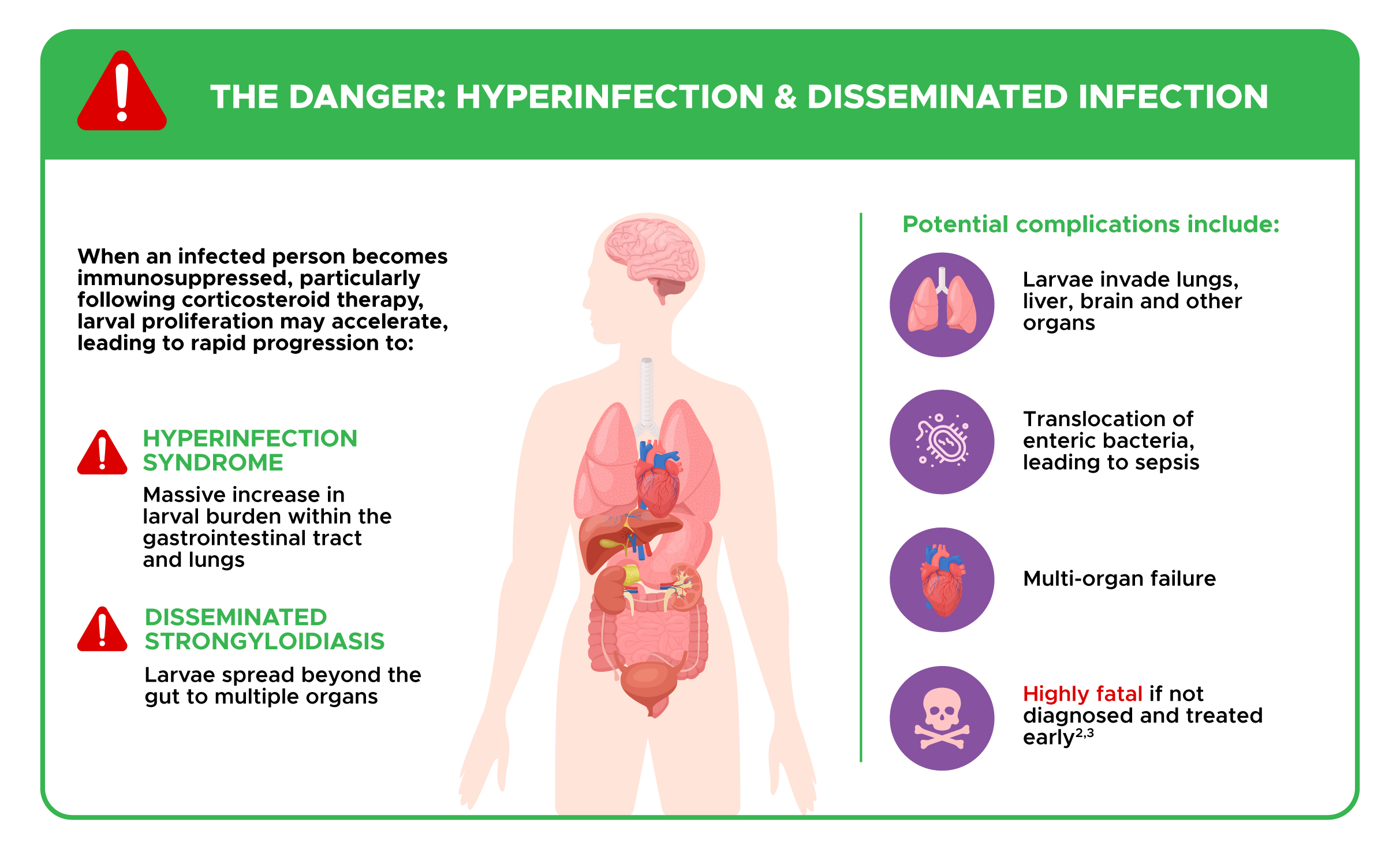
THE DANGER: HYPERINFECTION & DISSEMINATED INFECTION
When an infected person becomes immunosuppressed, particularly following corticosteroid therapy, larval proliferation may accelerate,
leading to rapid progression to:
- HYPERINFECTION SYNDROME: Massive increase in larval burden within the gastrointestinal tract and lungs
- DISSEMINATED STRONGYLOIDIASIS: Larvae spread beyond the gut to multiple organs
Potential complications include:
- Larvae invade lungs, liver, brain and other organs
- Translocation of enteric bacteria, leading to sepsis
- Multi-organ failure
- Highly fatal if not diagnosed and treated early2,3
HOW THE TRANSMISSION OCCURS?
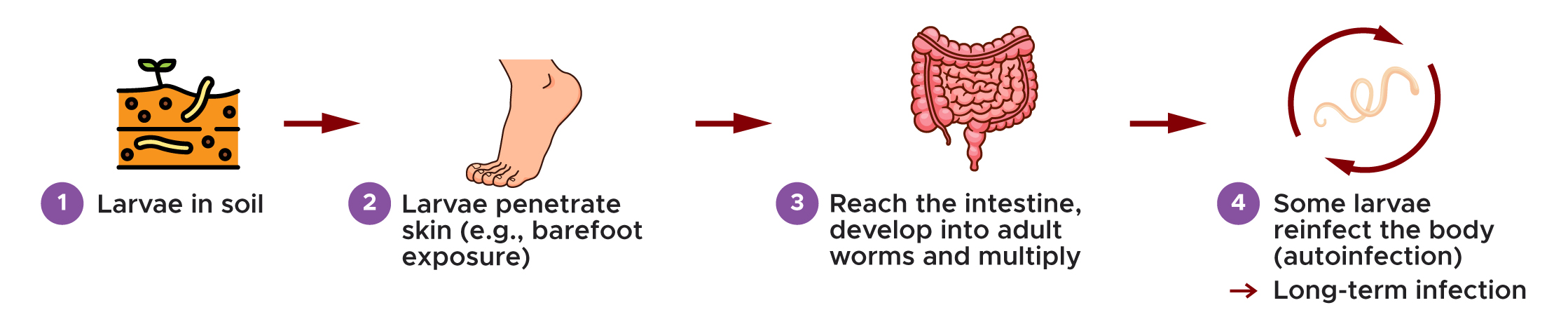
1. Larvae in soil
2. Larvae penetrate skin (e.g., barefoot exposure)
3. Reach the intestine, develop into adult worms and multiply
4. Some larvae reinfect the body (autoinfection), leads to long-term infection
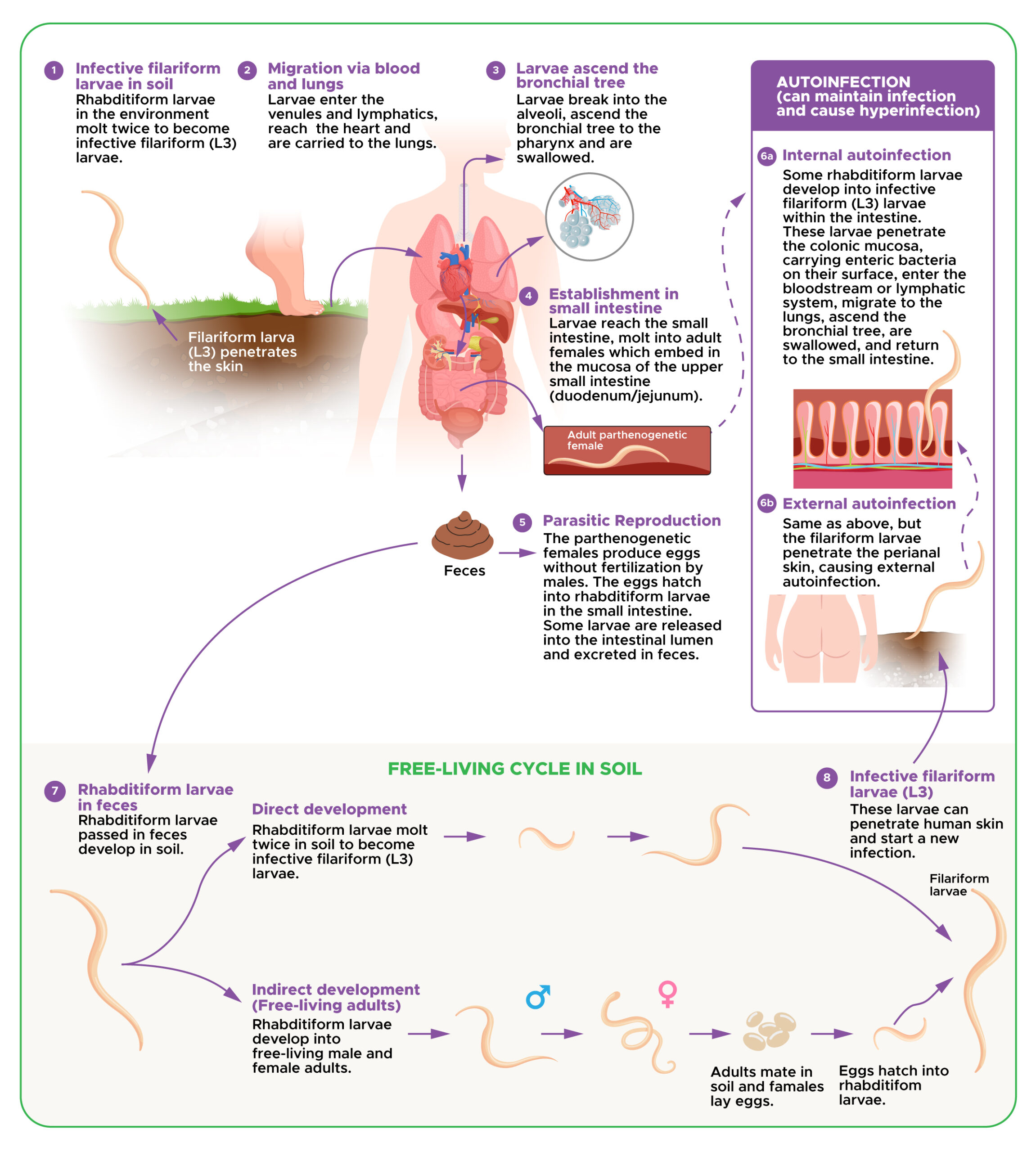
LIFE CYCLE OF STRONGYLOIDES STERCORALIS
- Strongyloides larvae penetrate the skin upon contact with contaminated soil, particularly when walking barefoot or wearing inadequate footwear.
- Larvae migrate via the bloodstream to the lungs, ascend the respiratory tract, and are swallowed. In the small intestine,
adult worms produce eggs that hatch into larvae. Some larvae are excreted in faeces, while others develop into infective L3 larvae that penetrate the colonic mucosa, causing internal autoinfection.
SYMPTOMS OF STRONGYLOIDIASIS
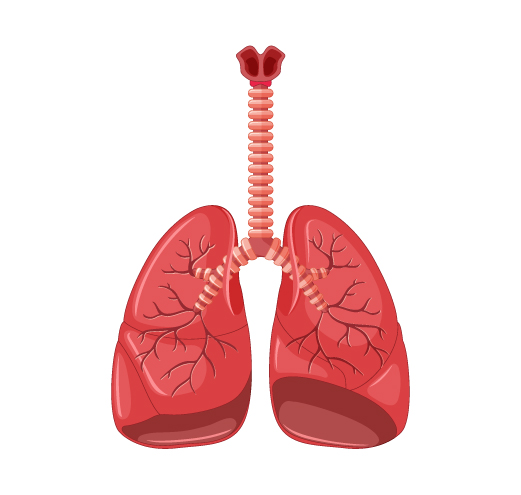
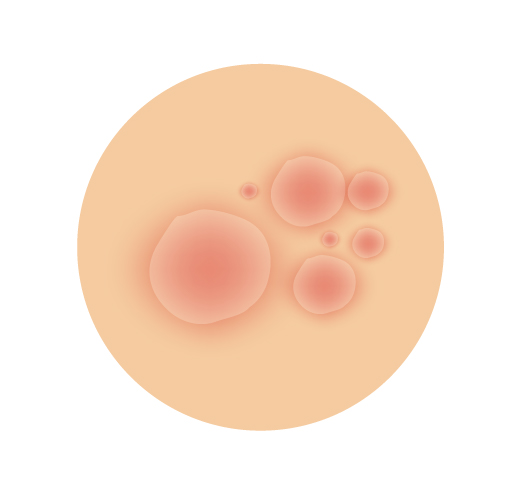
- Strongyloidiasis may cause intermittent symptoms affecting the gastrointestinal tract (abdominal pain and intermittent
or persistent diarrhoea), lungs (cough and wheezing) or skin (pruritus, urticaria, or larva currens). - Asymptomatic individuals may harbour the parasite for years without knowing they are infected.
SYMPTOMS CAN BE INTERMITTENT AND AFFECT:
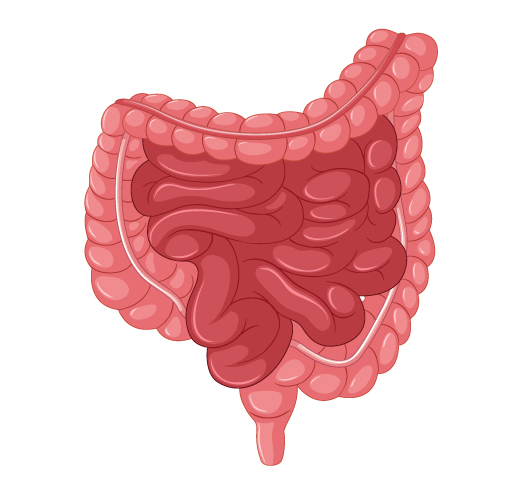
INTESTINE
- Abdominal pain
- Diarrhoea (on-and-off or persistent)
Symptoms may come and go
LUNGS
- Cough
- Wheezing
Respiratory symptoms may be mild or recurring.
SKIN
- Itching
- Rashes or hives (urticaria)
- Larva currens
Skin symptoms can flare up at time
WHY IS IT OFTEN MISSED?
Strongyloidiasis is difficult to detect because:
- Routine parasitological diagnostic methods are insensitive
- Symptoms are often mild or intermittent
- Many individuals remain asymptomatic for years
- Infections are frequently missed or diagnosed too late
As a result, the infection may silently persist and eventually lead to serious, potentially life-threatening complications, particularly in immunosuppressed individuals. For this reason, it is extremely important to suspect, diagnose and treat the infection at early stage.
References:
1. Buonfrate, D.; Bisanzio, D.; Giorli, G.; Odermatt, P.; Fürst, T.; Greenaway, C.; French, M.; Reithinger, R.; Gobbi, F.; Montresor, A.; et al. The Global Prevalence of Strongyloides stercoralis Infection. Pathogens 2020, 9, 468. https://doi.org/10.3390/pathogens9060468
2. CDC – DPDx (2019) Strongyloidiasis [Accessed 27 Apr 2026]
3. WHO (n.d.) Strongyloidiasis Key Facts [Access 27 Apr 2026]