
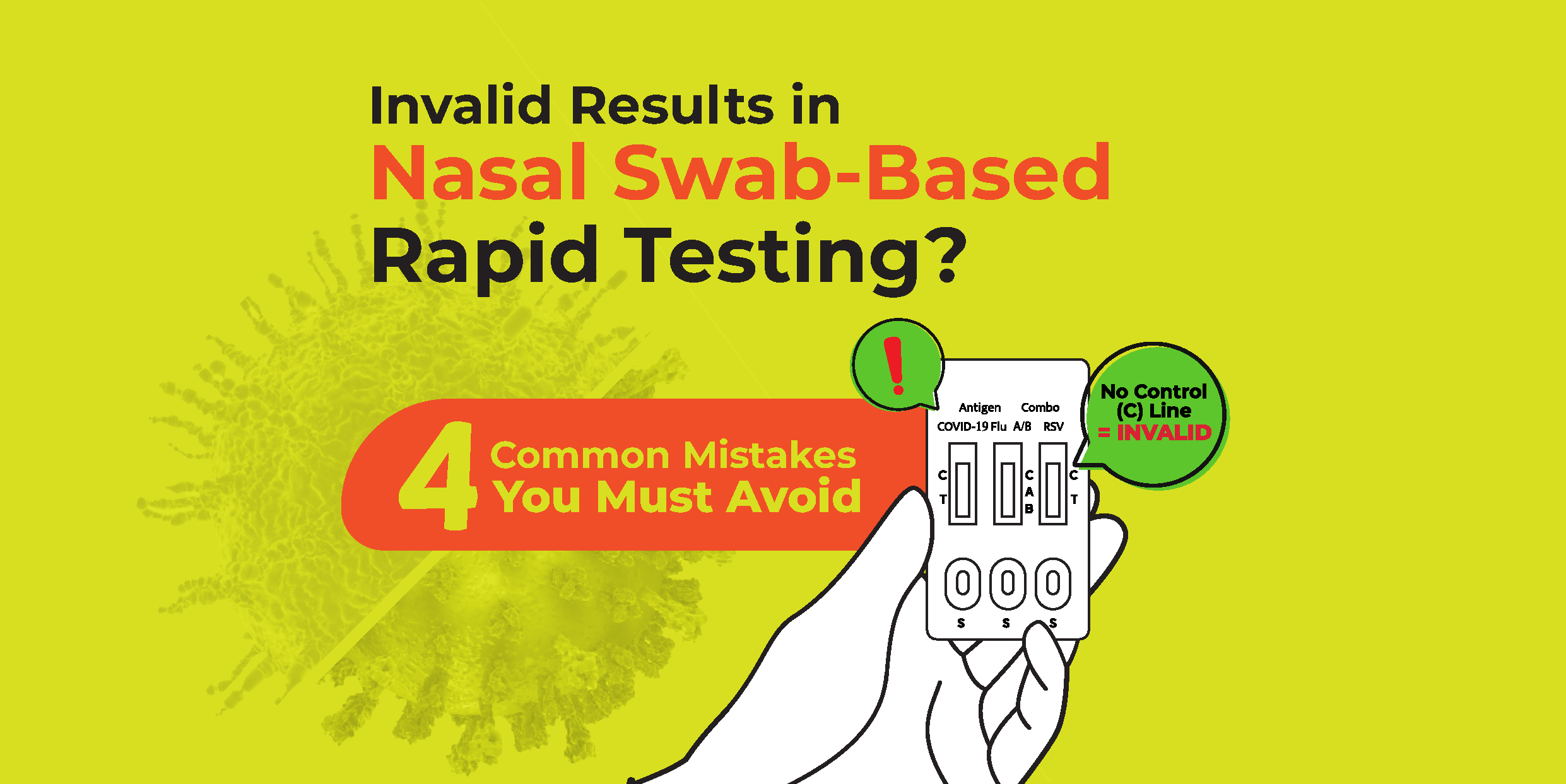
Invalid results may occasionally occur in lateral flow rapid antigen testing when testing procedures are not performed correctly.
In most cases, the absence of a control (C) line indicates that the test flow was interrupted due to sample handling or procedural factors rather than product performance itself.
This technical guide highlights common factors that may affect assay validity and provides practical tips to support accurate testing for nasal swab samples.
Common Causes of Invalid Result in Rapid Tests
|
The “Traffic Jam”: Sample is Too Thick |
What Happens: |
|
The “Dry Run”: Not Enough Sample |
What Happens: Without sufficient liquid, the sample cannot properly “wick” along the test strip. As a result, it never reaches the control (C) line, leading to an invalid result. Think of it like a marathon runner who runs out of water halfway through the race—the finish line is there, but they simply can’t reach it. |
|
The “Flood”: Too Much Sample |
What Happens: Instead of a smooth, controlled flow, the liquid pools on the strip, disrupts the chemistry and preventing the test lines from forming correctly. |
|
The “Impatience” Factor: |
What Happens: |
How to Get a Valid Result: Step-by-Step Guide
|
Step |
What To Do |
Why It Matters |
|---|---|---|
|
The Swirl |
Rotate the swab in the extraction buffer for at least 10 times or 15–30 seconds. |
Releases the virus from the swab into the extraction buffer. |
|
The Squeeze |
Squeeze the sides of the tube against the swab as you pull it out. |
Helps maximize recovery of viral antigens from the swab. |
|
The Count |
Hold the tube vertically and count the drops exactly. |
Helps maintain optimal sample flow across the test strip. |
Best Practices for Accurate Rapid Antigen Testing
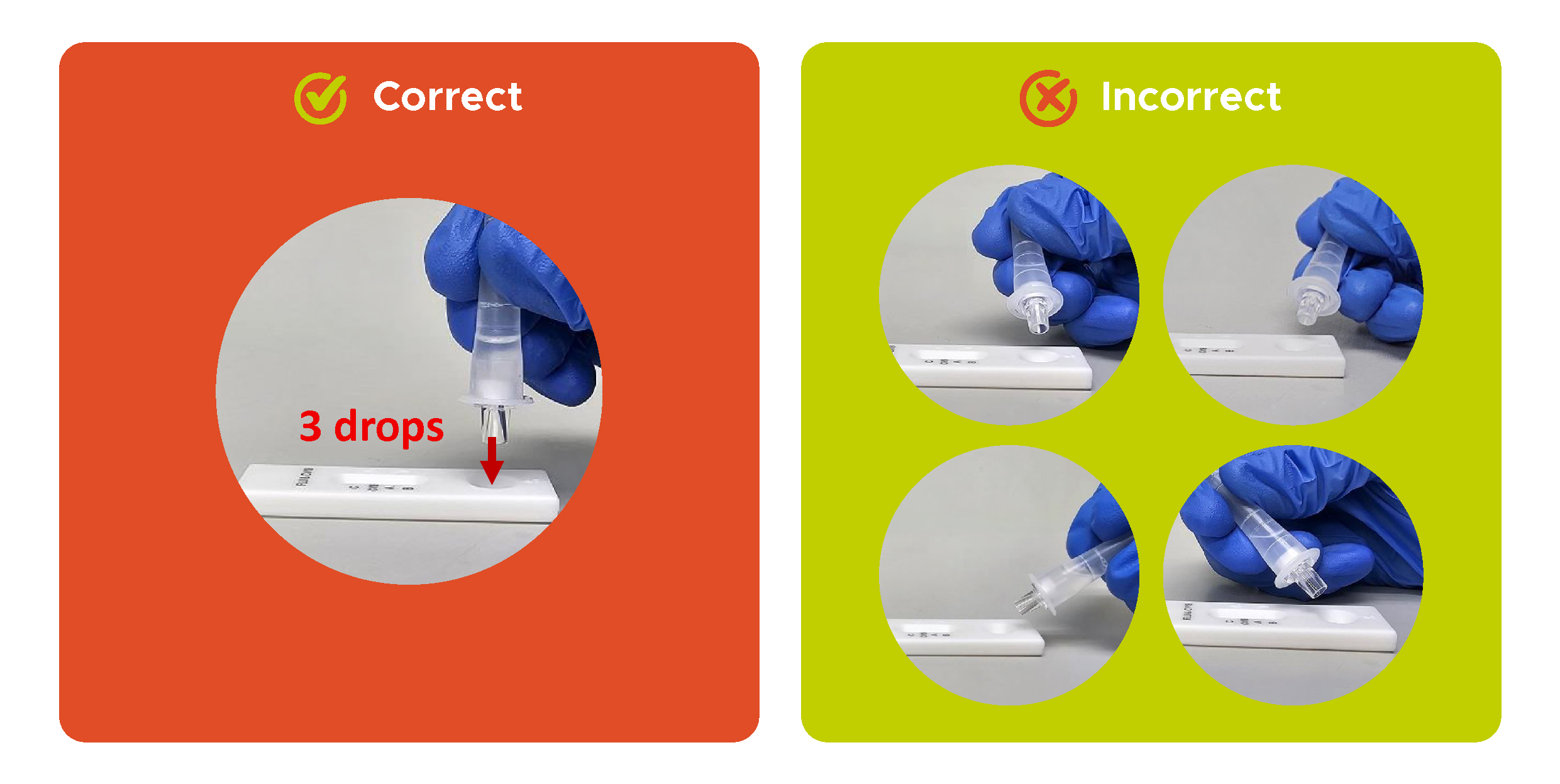
1. The “Perfect Drop”:
Always hold the sample tube completely vertical (straight up and down) over the sample well. This ensures each drop is the correct volume. Aim directly for the center of the sample well!
2. The “Squeeze & Swirl”:
Swirl the swab vigorously in the extraction buffer, then squeeze the sides
of the tube against the swab tip as you pull the swab out. This helps release concentrated viral proteins needed for a better signal.
3. The “Flat & Time” Rule:
Keep the test cassette on a flat surface and do not move or tilt it while the liquid is flowing. Set a timer and read the result exactly at the time specified – no earlier and no later.
4. Follow Manufacturer’s Instruction:
For best results, always read instruction for use and watch the manufacturer’s video guide before performing the test. The step-by-step video demonstrates correct swab handling, sample preparation, sample drop counting and result interpretation – helping you avoid common mistakes that lead to invalid results.
Example:
A video guide demonstrating how to use the RESZON ABC Combo Test – Flu A+B & COVID-19 Ag (Nasal Swab) is available here:
Quick Tips to Avoid Invalid Test Results
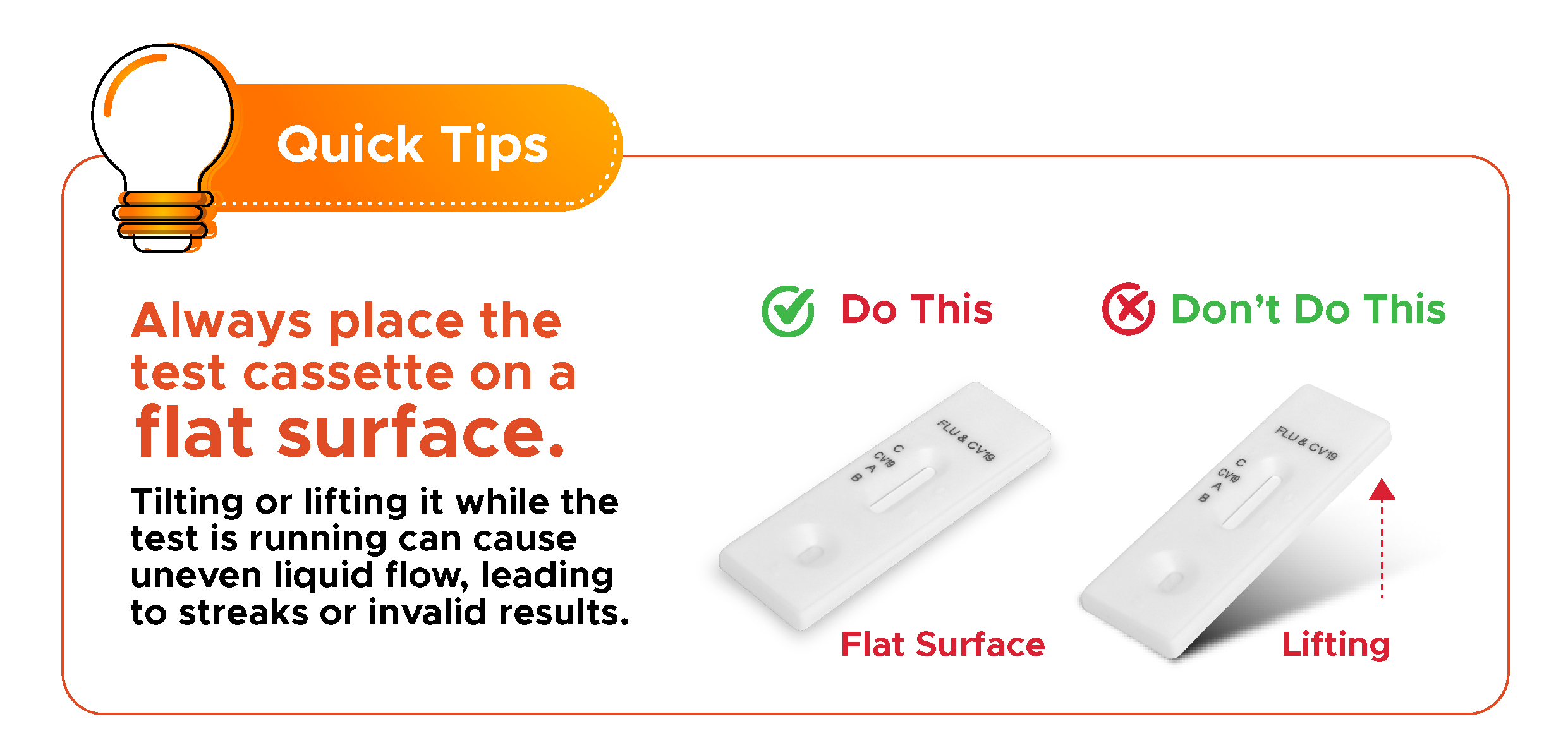
Always place the test cassette on a flat surface. Tilting or lifting it while the test is running can cause uneven liquid flow, leading to streaks or invalid results.
When to Repeat the Test or Seek Medical Advice
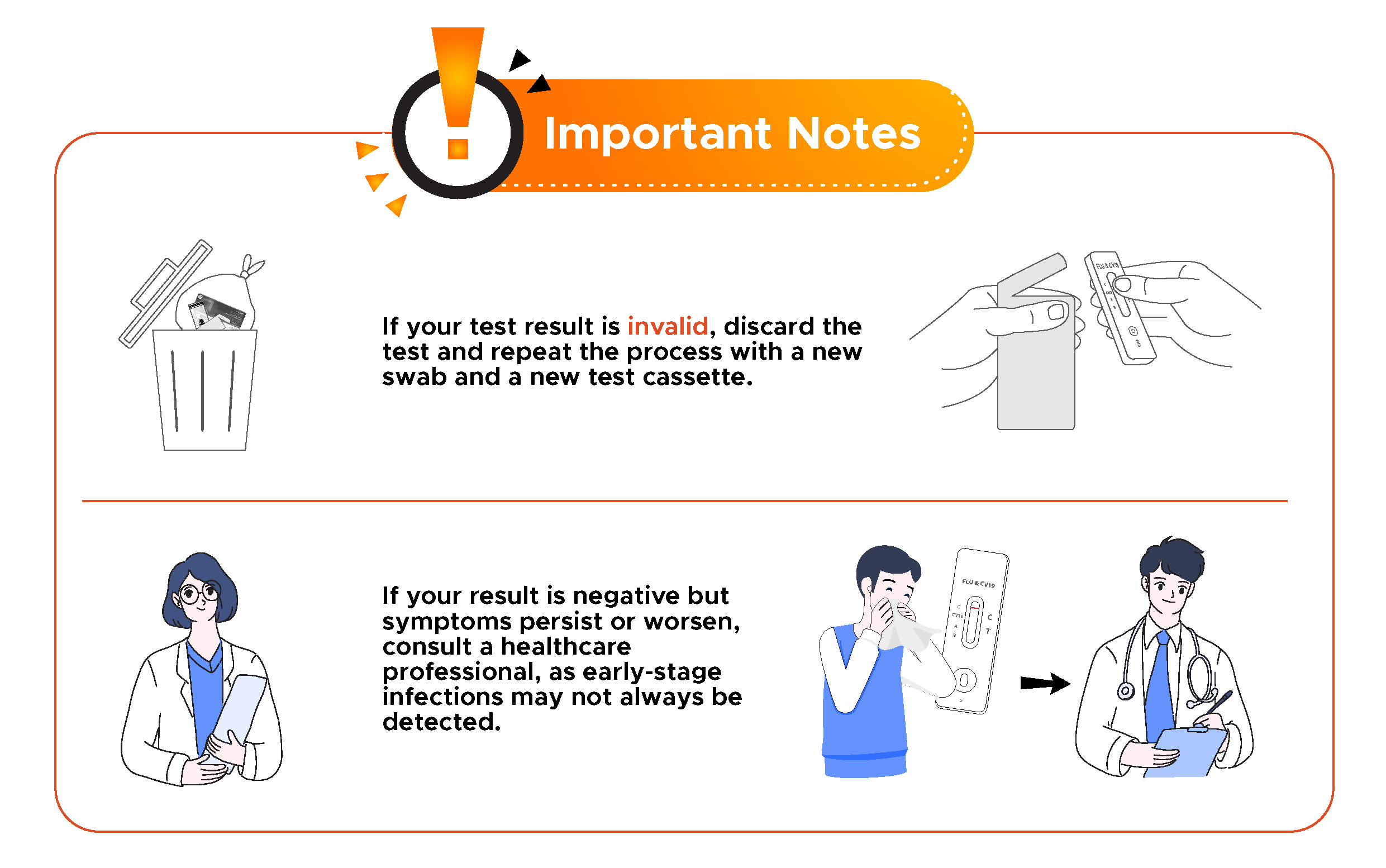
- If your test result is invalid, discard the test and repeat the process with a new swab and a new test cassette.
- If your result is negative but symptoms persist or worsen, consult a healthcare professional, as early-stage infections may not always be detected.
References:
- Karen Steward (2024) An Introduction to the Lateral Flow Test: Strengths, Limitations and Applications. Technology Networks.
- Anna MacDonald and Karen Steward (2025) Lateral Flow Testing: Principles, Applications and Innovations. Technology Networks
- WHO (2010) Use of Influenza Rapid Diagnostic Tests. ISBN: 9789241599283