Selangor, 1 Dec 2025 – Over 40 years have passed since HIV was first identified in the early 1980s by researchers at the Pasteur Institute in France, yet misconceptions, stigma and misinformation surrounding HIV and AIDS remain widespread. These long-standing misunderstandings continue to influence testing uptake and delay early diagnosis — making accurate, accessible point-of-care HIV screening more important than ever.
MYTH VS FACT: ADDRESSING MISCONCEPTIONS ABOUT HIV & AIDS
Even after four decades, myths and misinformation still prevent individuals from seeking testing.
These myth-busting messages help encourage more people to take the important step of knowing their status.
GLOBAL HIV EPIDEMIC SNAPSHOT
Though remarkable progress has been made over the past decades, the global HIV response stands at a critical point.

Testing gaps persist across low- and middle-income countries, especially among vulnerable and hard-to-reach communities. Undiagnosed HIV remains the largest barrier to ending the epidemic.
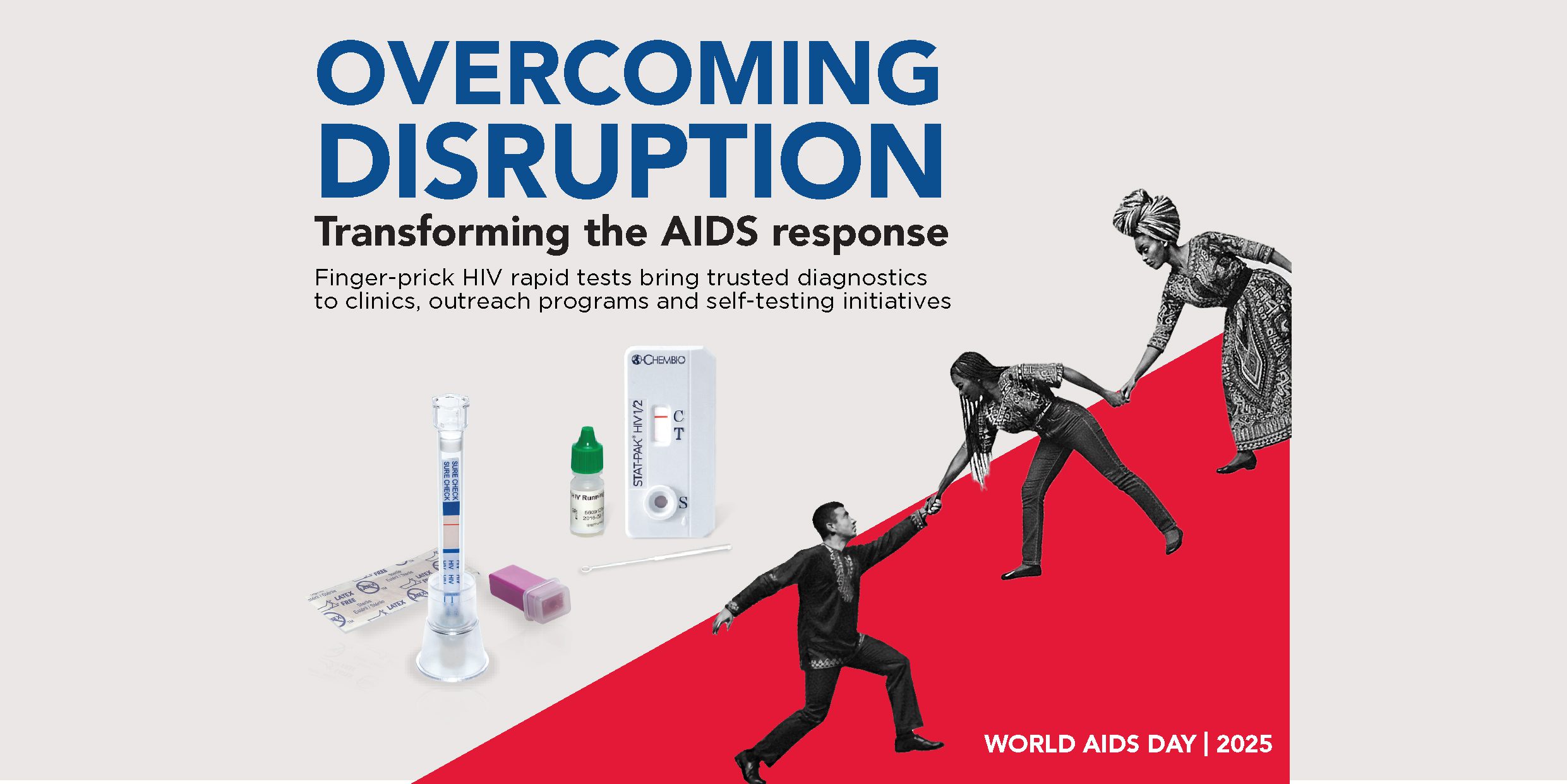
WORLD AIDS DAY 2025: OVERCOMING DISRUPTION, TRANSFORMING THE AIDS RESPONSE
Each year on 1 December, World AIDS Day reinforces a key message: Timely HIV diagnosis saves lives and prevents onward transmission.
Expanding access to rapid, decentralised testing is therefore essential to identify the undiagnosed, accelerate linkage to care, and prevent onward transmission.
To reach the undiagnosed, healthcare systems must continue expanding access to rapid, decentralised testing in:

WHY HIV POINT-OF-CARE TESTING (POCT) MATTERS NOW
- Global funding constraints and service disruptions threaten continuity of screening and prevention programmes — making resilient POCT strategies a frontline defence for clinics and outreach programmes.2
- Geographic shifts in new infections (rising in some regions outside sub-Saharan Africa) and persistent undiagnosed individuals mean clinicians must bring testing closer to patients3
WHY BLOOD-BASED HIV RAPID TEST IS A BETTER OPTION?
Want to explore the science behind why blood-based HIV rapid tests consistently outperform oral-based tests?
Unlock our curated journal digest summarising key finding from The Lancet, PLoS ONE, BMC Infectious Diseases, and other peer-reviewed publications.
This exclusive resource summarises real-world data showing how blood-based HIV rapid test offer higher sensitivity and lesser false negatives — insights every clinician, programme manager, and healthcare professional should know.
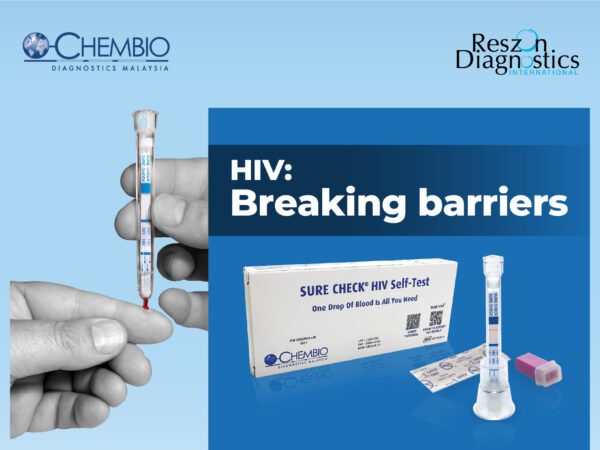
Finger-prick blood-based HIV rapid tests offered by Reszon Diagnostics International Sdn. Bhd. (“Reszon”) such as SURE CHECK® HIV Self-Test and HIV 1/2 STAT-PAK® Assay are clinically proven to deliver high sensitivity and reliability, supporting WHO recommendations for robust HIV testing programs.


FEATURED IN THE HEALTH NEWSPAPER!


SURE CHECK® HIV Self-Test is recognised for its role in breaking barriers to HIV prevention by enabling private, accurate, and empowering self-testing. This reinforces our commitment to public health, community engagement, and partnerships with NGOs and healthcare providers.
Read More

SURE CHECK® HIV Self-Test is available online from authorised pharmacies — enabling individuals to check their status discreetly and reliably.


PARTNER WITH US – TOGETHER TOWARDS ENDING AIDS BY 2030

More enquiries? For partnership or distribution opportunities, feel free to connect with our team.
WhatsApp : +6012 262 8689
Phone : +603 8022 1162
Email : info@reszonics.com
Website : wwww.reszonics.com
References
- World Health Organization (WHO) (2025), HIV and AIDS Fact Sheet, accessed 19 November 2025
- Jennifer Rigby (2025), UN proposes closing UNAIDS in 2026 as funding cuts bite, Reuters, accessed 19 November 2025
- Guardian News & Media Limited (2024) Most new HIV infections occurred outside sub-Saharan Africa for the first time-UN Report, accessed 19 November 2025